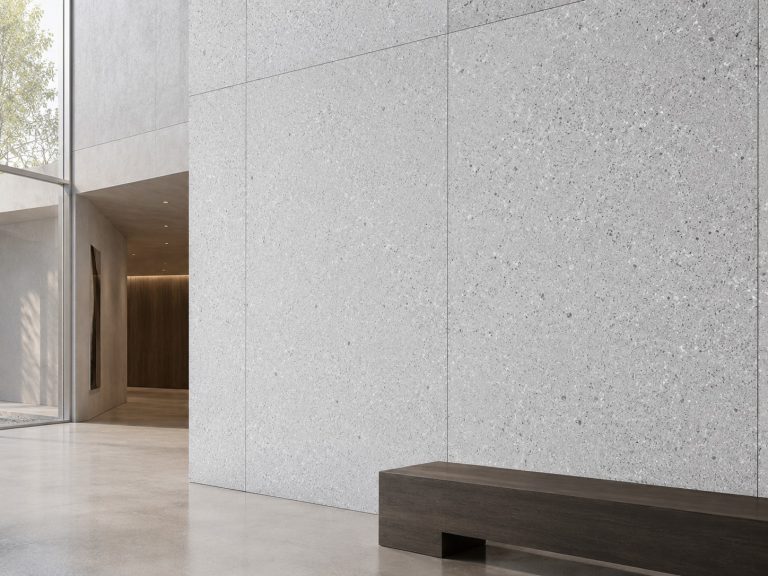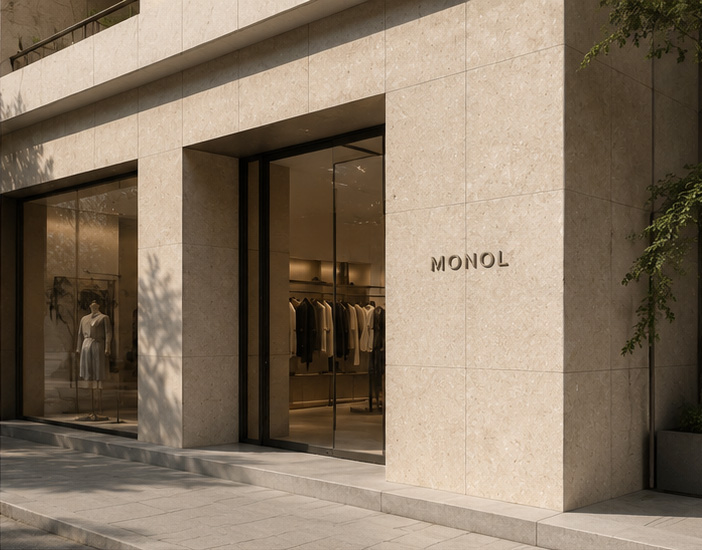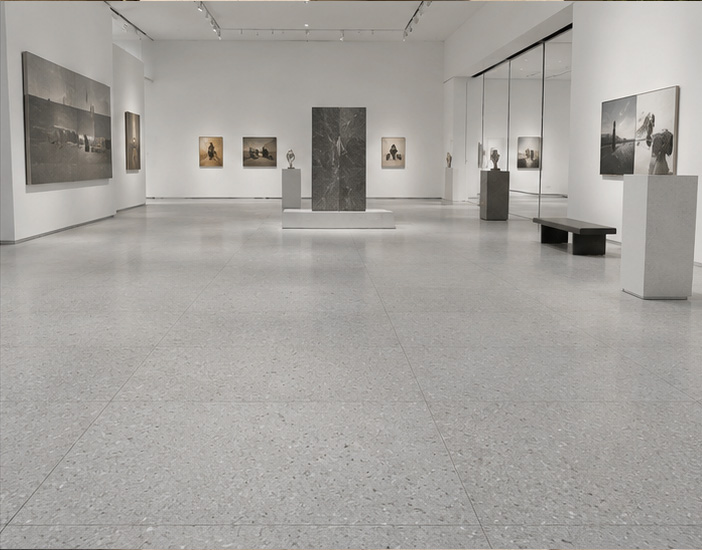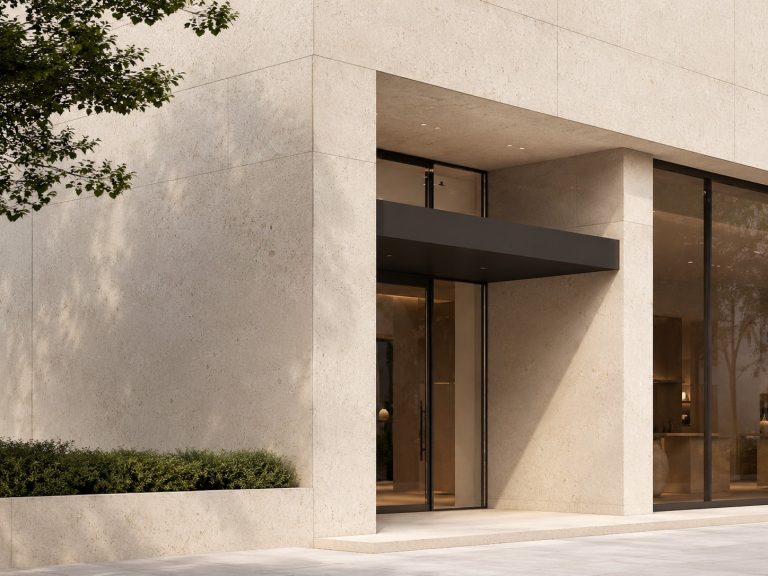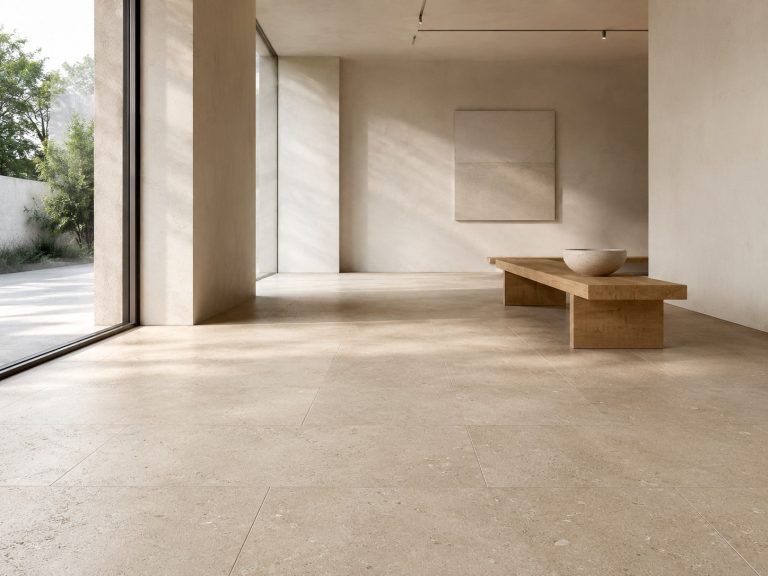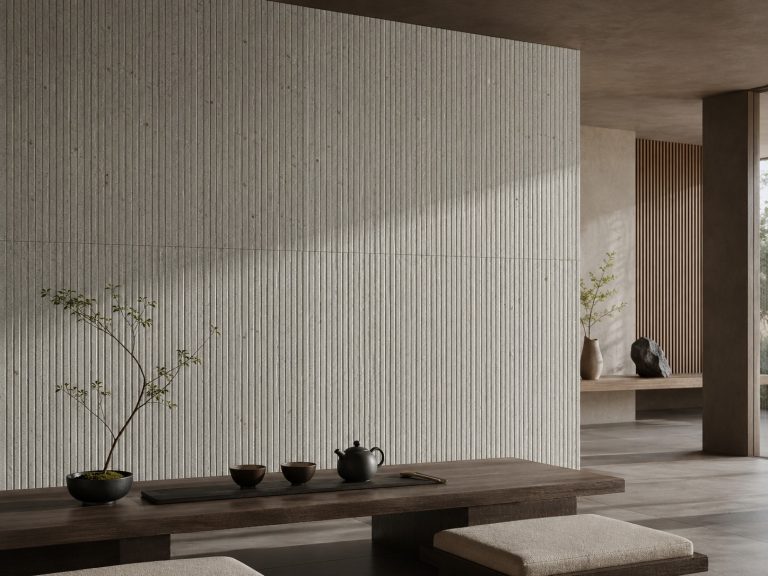
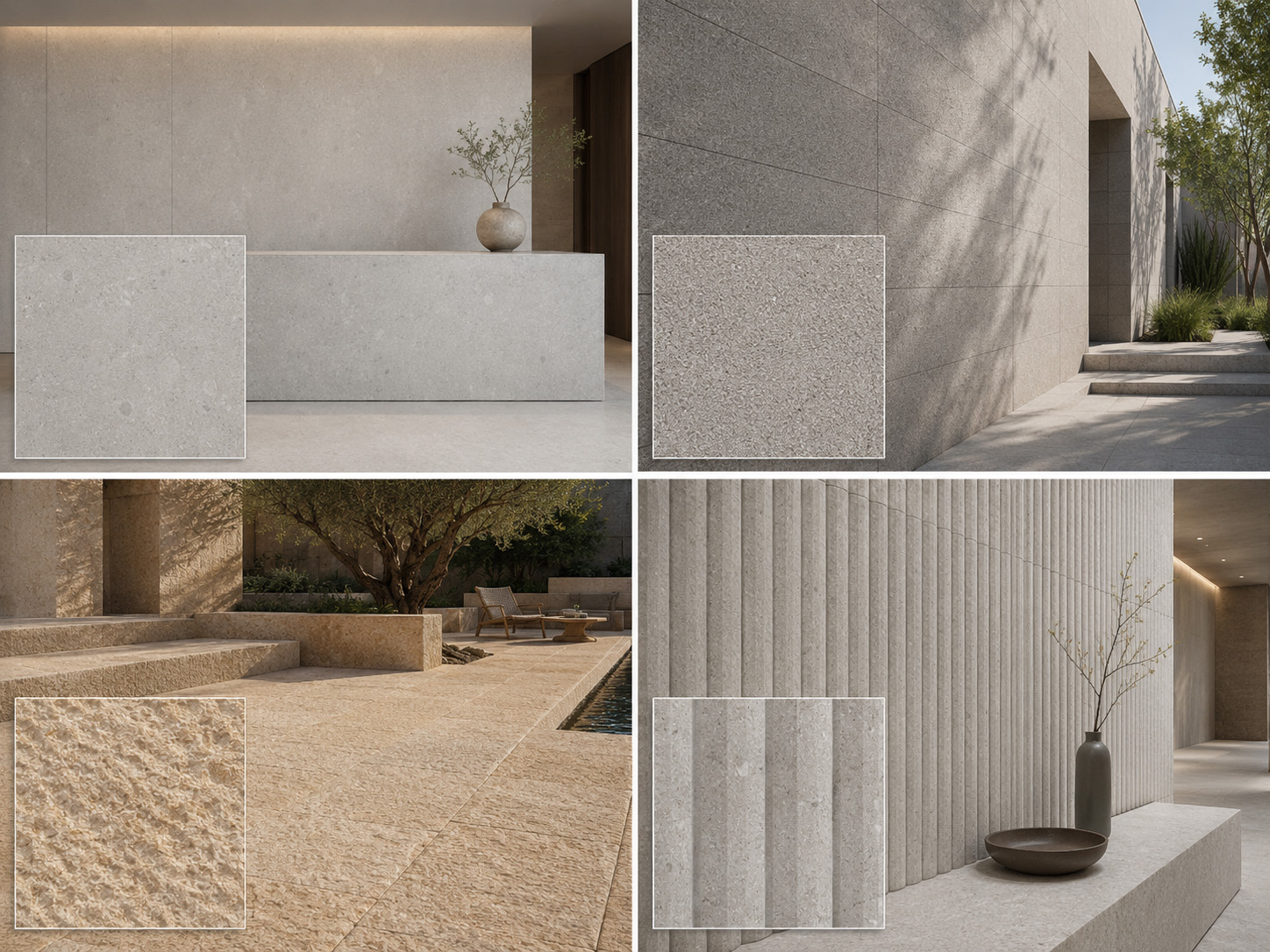
Images are useful for early selection, but architectural surface materials should always be confirmed through samples. Color, texture and finish can change depending on lighting, viewing distance and surrounding materials.
This guide explains how designers, contractors and buyers can select Monol Recycled Limestone efficiently from concept to project confirmation.
Step 1: Define the application
Start by confirming where the material will be used. A hotel lobby wall, outdoor step, retail counter and gallery floor have different requirements. Application affects format, thickness, finish, edge detail and maintenance planning.
Step 2: Choose the color direction
Decide whether the space needs soft ivory, warm beige, warm cream, natural grey, mist grey, mineral blue grey, silver grey or golden sand. The choice should be based on the design mood, lighting and other materials in the space.
Step 3: Choose the surface finish
Honed finish is suitable for refined interiors. Sand finish adds more texture for walls and facades. Bush-hammered finish is suitable for stronger outdoor expression. Decorative textures can be used for feature walls and custom elements.
Step 4: Confirm physical samples
Physical samples should be reviewed under actual or similar lighting conditions. Place the sample next to wood, metal, fabric, glass and paint samples if possible. This helps the design team understand the complete material palette.
Step 5: Discuss project requirements
- Required quantity or area
- Application and installation environment
- Preferred size and thickness
- Surface finish and edge detail
- Packing and delivery requirements
- Any test report or technical documentation needed
Final thought
A clear sample process saves time and reduces misunderstanding. DX STONE COMPANY can support customers with Monol sample selection, project communication and material recommendations before quotation and production.