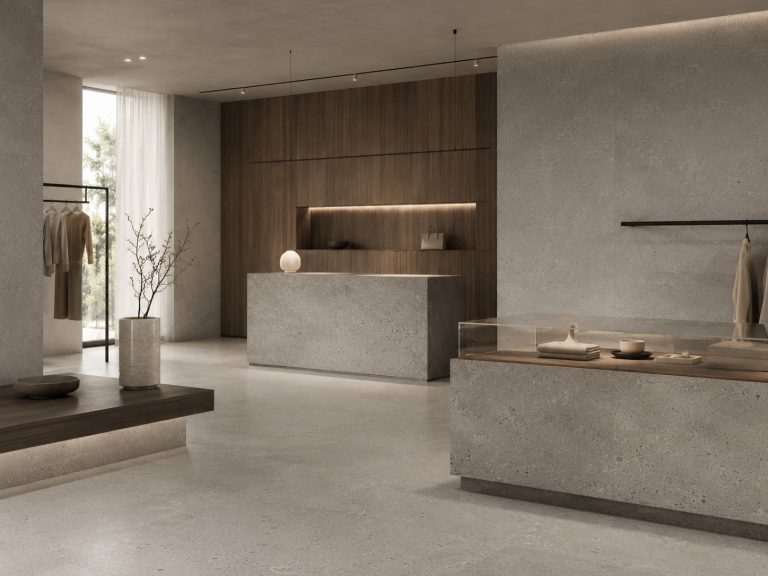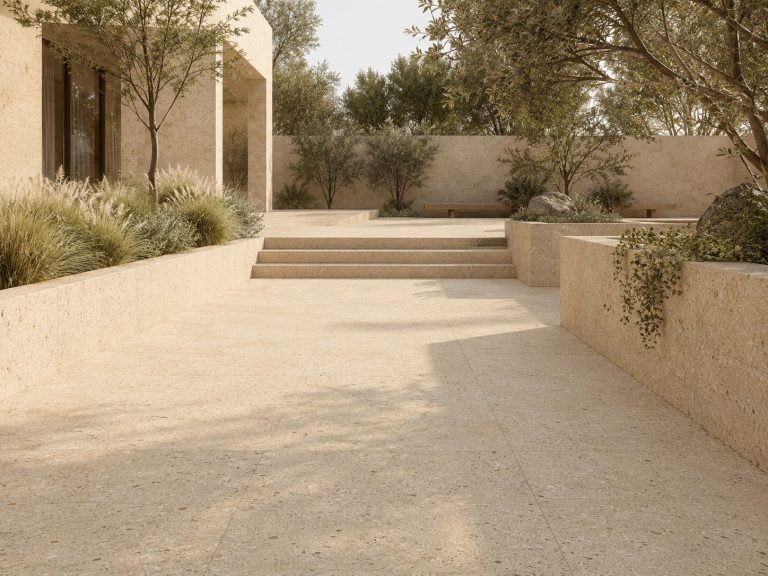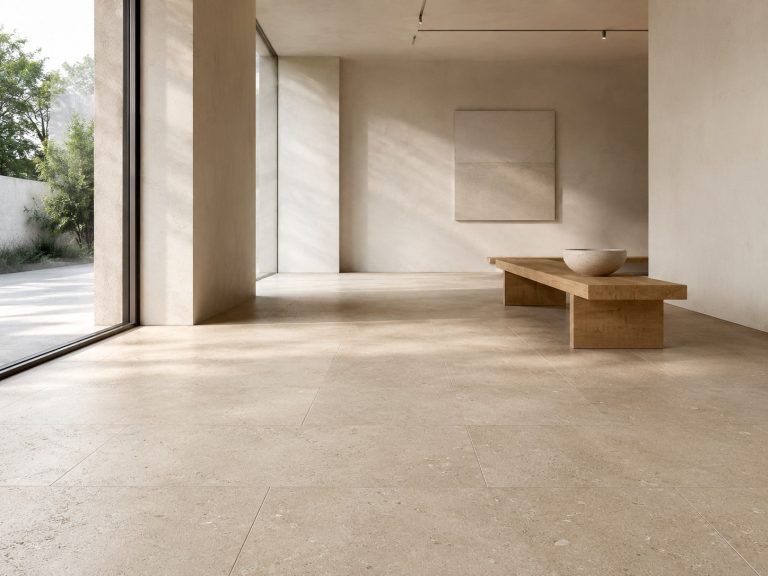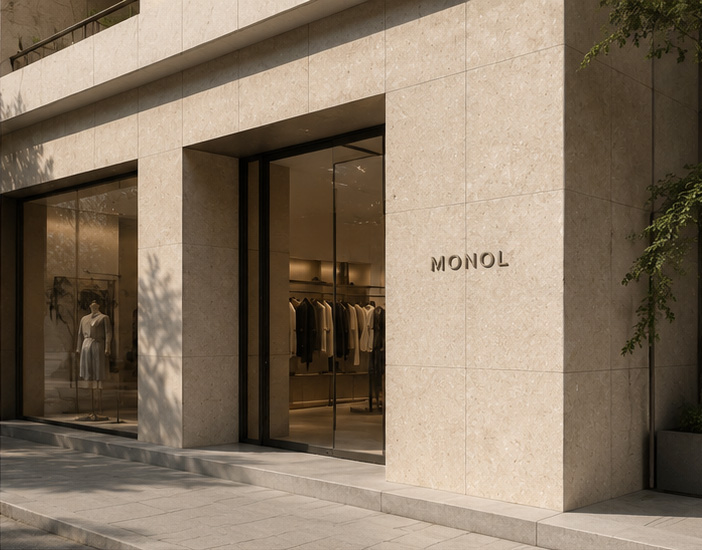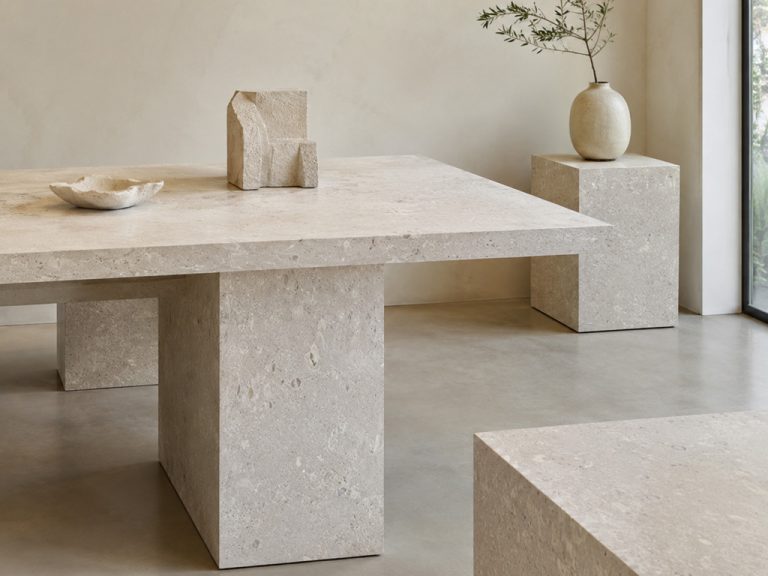
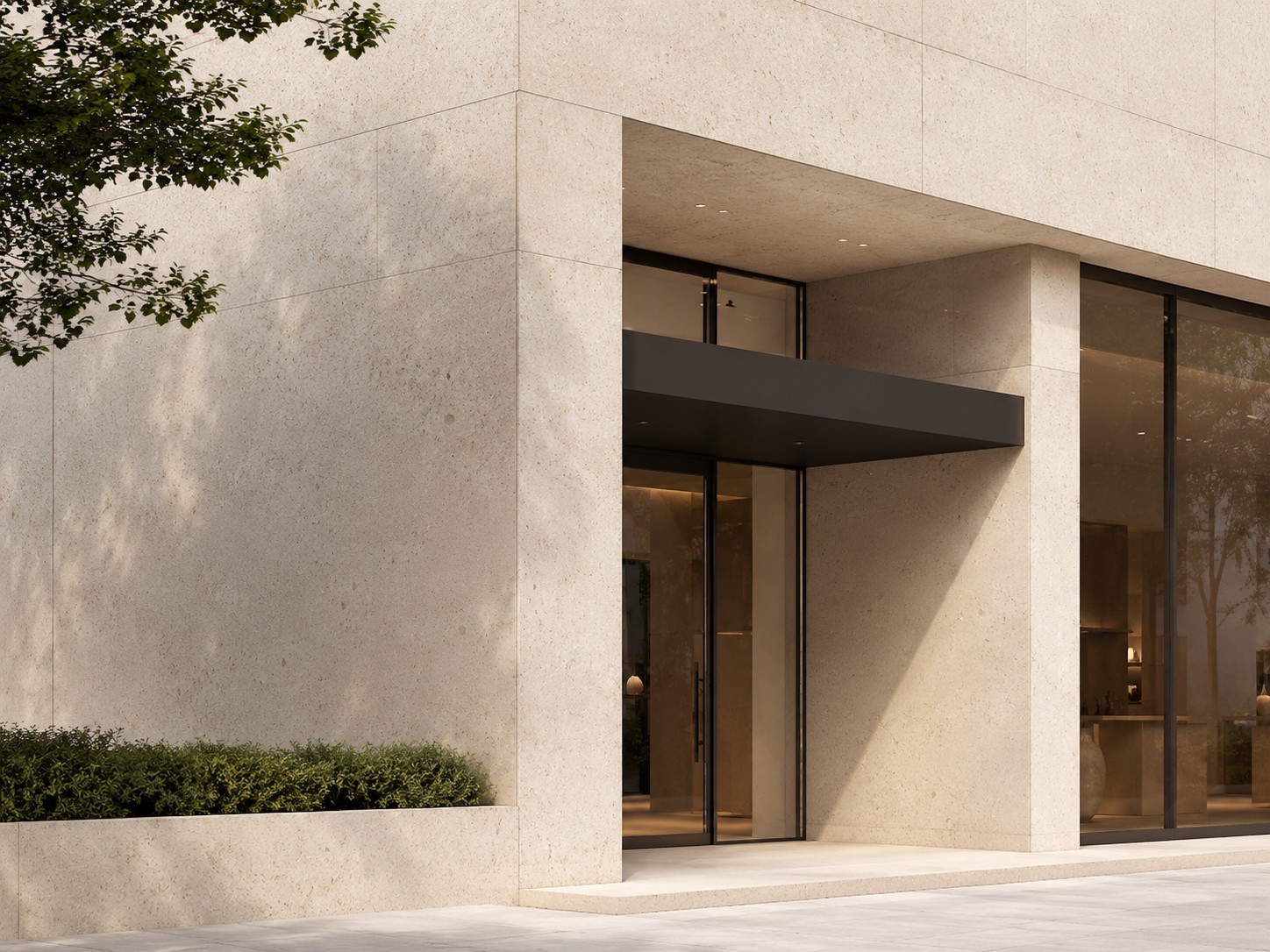
Wabi-sabi design values quietness, imperfection, natural aging and emotional depth. It does not need decorative excess. Instead, it depends on honest textures, soft shadows and materials that feel close to nature.
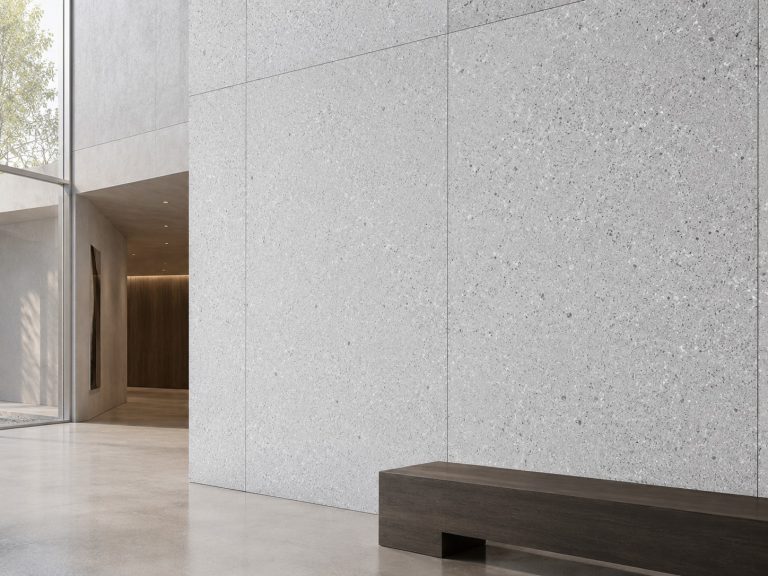
Monol Recycled Limestone fits this atmosphere because it is calm rather than dramatic. Its mineral particles, subtle pores and matte surface create an understated background that allows the space to breathe.
The beauty of quiet surfaces
A wabi-sabi interior often uses a limited palette: warm grey, soft beige, ivory, clay, timber, linen and muted black. In this environment, wall and floor surfaces should not compete with furniture or objects. They should create depth quietly.
Limestone-inspired surfaces are especially suitable because they show natural variation without becoming too busy. The texture is visible when light touches it, but it does not dominate the room.
How to use Monol in wabi-sabi spaces
- Use large wall panels behind low furniture or built-in benches
- Select honed finishes for soft, matte reflection
- Use linear or carved textures only on a focused feature wall
- Combine grey limestone tones with dark wood, handmade ceramics and natural fabrics
- Keep joints simple and aligned to maintain a quiet architectural rhythm
Suitable spaces
Monol Recycled Limestone can be used in tea rooms, private residences, boutique hotels, spas, galleries, concept stores and restaurants that want a natural, reflective mood. In these spaces, the material is not just decoration. It becomes part of the atmosphere.
Final thought
Wabi-sabi does not mean unfinished or rough. It means balanced, restrained and human. A well-selected limestone surface can help create that balance, giving a room silence, warmth and permanence.