Texture is not only something we touch. It changes how we see light, understand scale and feel a space. A smooth matte surface can feel quiet and refined, while a strong textured surface can feel grounded and outdoor-oriented.
Monol Recycled Limestone offers different surface effects for this reason. The finish should be selected as part of the design concept, not as a final technical detail.
Light and shadow
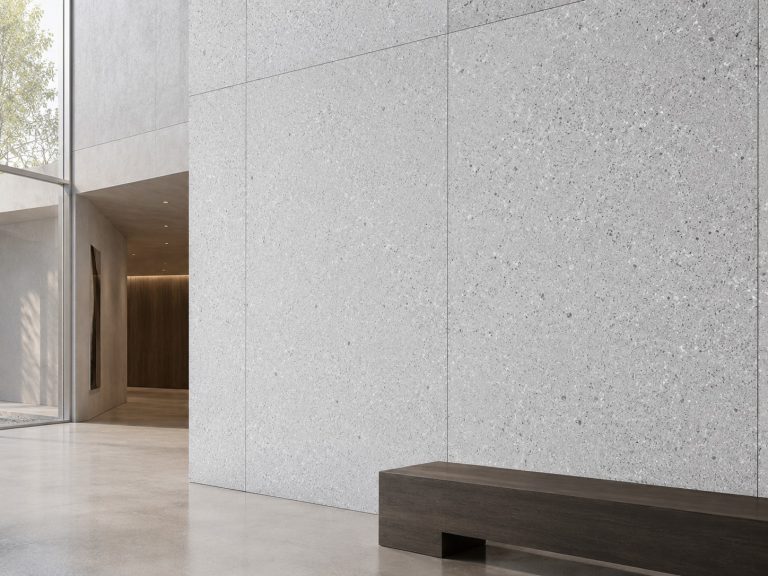
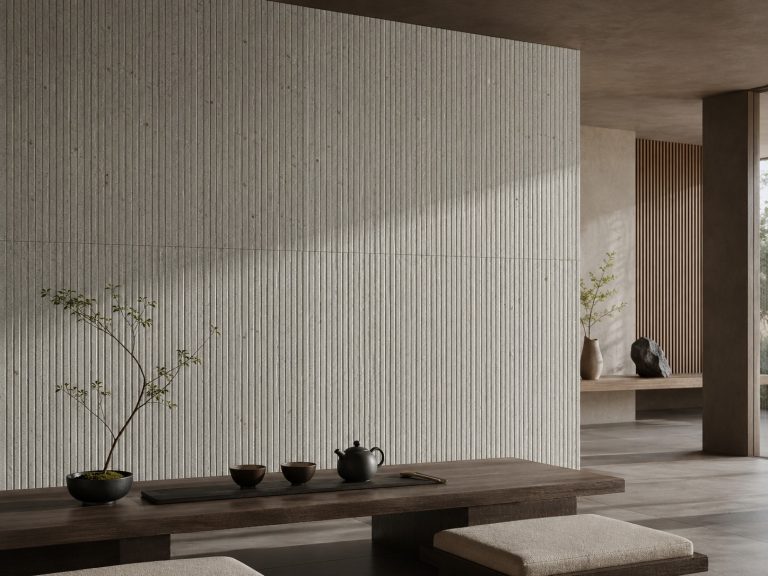
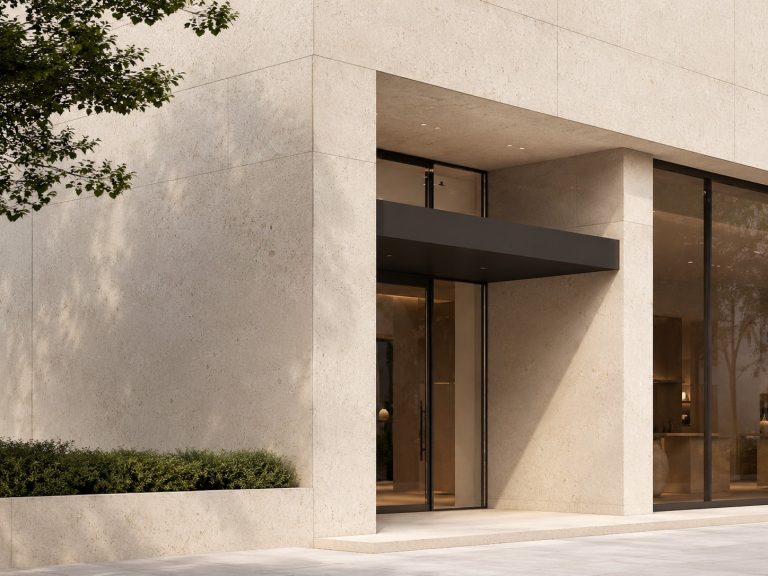
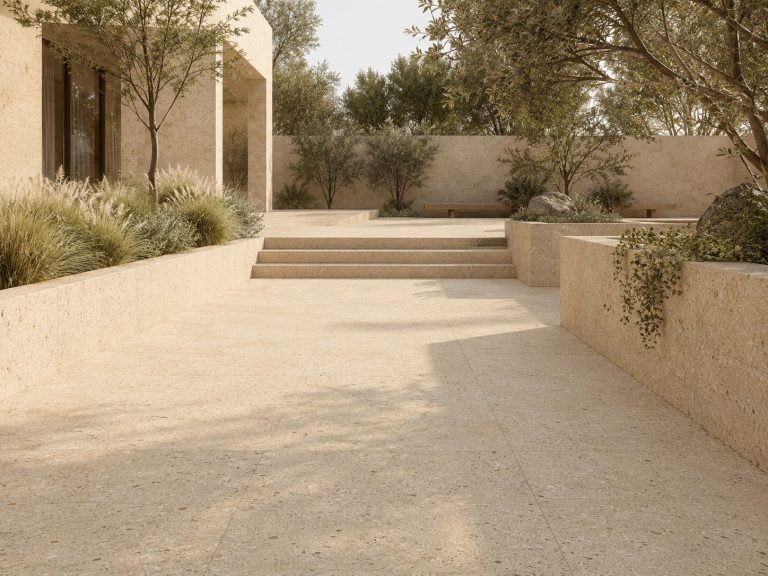
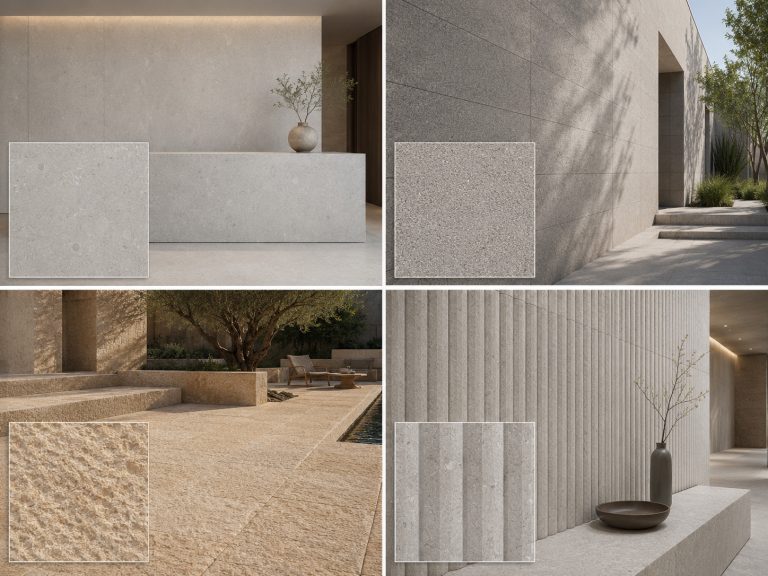
A honed surface reflects light softly. It is suitable when the design needs calm continuity. A sand finish scatters light slightly and makes the surface feel more tactile. A bush-hammered surface creates stronger shadows, especially outdoors. Decorative linear textures create rhythm and depth.
Touch and atmosphere
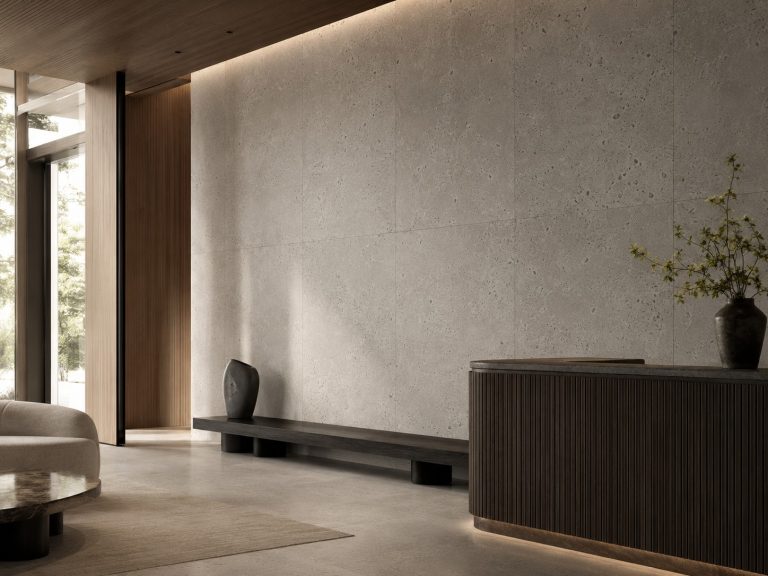
In a hotel lobby, people may not touch the wall often, but the visible texture affects the feeling of quality. In a tea house, a linear texture can create a handcrafted atmosphere. In a courtyard, a rougher paving texture can connect the architecture with the landscape.
Scale and proportion
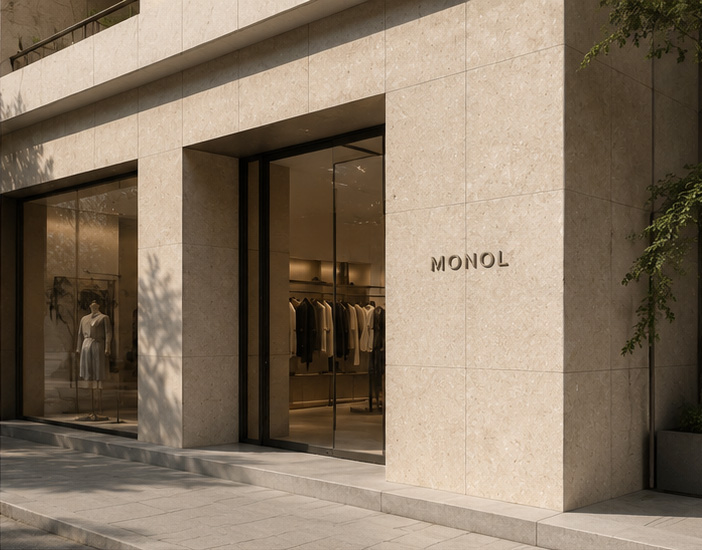
Large smooth panels make a space feel open and modern. Smaller modular tiles can make outdoor paving more human-scaled. Linear textures can make a wall feel taller or wider depending on direction. Herringbone or carved relief patterns can turn a simple wall into a design feature.
Design recommendations
- Use honed finishes for calm backgrounds and refined surfaces
- Use sand finish when the surface should feel more natural and tactile
- Use bush-hammered textures for outdoor and landscape areas
- Use decorative textures selectively, not everywhere
- Review samples under side light to understand the real texture
Final thought
The right texture can make a simple material feel architectural. Surface effects give Monol Recycled Limestone the flexibility to move from quiet backgrounds to expressive feature walls and outdoor paving.